
An autumn day, russet and fall, wondering aloud, unlocking memories that gather before they become more elusive , remembering Sandy Cleland. This is written partially as a celebration, but also as an elegy and unfeigned lament.
He richly deserves a chapter to himself. Sandy was known as an emotive natural history photographer, that was in some ways his identity, talented and genuine. Beyond that he was very personable, like a warm Zephyr breeze, modest, contented with a ‘heart of Lothian’. He was born in Edinburgh, but grew up in Bo’ness, on the Firth of Forth, where those now difficult to catch or turn pages of his youth were written. Above and beyond everything else Sandy was a devoted husband to Cathy and ‘dad’ to Karen. His career was as a Civil Servant in the Scottish Agricultural College. Sandy was an expert in his field, literally – he carried an encyclopaedic knowledge of grass, sedges and moss. He understood habitat, flora and fauna because of his empathy for our natural world . The camera, cine at first, then stills, arrived in teenage years. Inspired by Armand Denis and Peter Scott, whose programmes he saw on TV, he became gripped by nature in all its magnificence and loyally portrayed it as such. In the UK’s photographic circles, he gave more than most. Edinburgh Photographic Society will not be the same without his assuring guidance, where he was a member during a rich chapter in the club’s history – 50 or more years, including 3 as President. Scottish Photography is now missing one of its most revered speakers. With the RPS he became a fellow back in 1986, later he was heavily involved in the distinctions process – chairing panels, advisory days and on the advisory board. He became a proud and deserving recipient of The Fenton Medal. As a lecturer he travelled widely, latterly on behalf of Fotospeed. Sandy also adjudicated on national and international salons often in the UK, but also in the Algarve and Austria. In 2012 he was elected as a member of the London Salon. Fortunately, Karen also has that special photographers instinct, having shared his hobby, she was, he affectionately intoned ‘his photographic pal’. Since his passing there has been a tidal wave of validation and appreciation of all he did, call it stature, call it presence.
Luckily an abundance of lighter and comical moments are there to recall. Here
are some of them. Sandy photographed miniature things others never saw, making them significant – ‘ wee beasties’, bugs, flies, parasites, the lesser spotted, those six-legged things that bite and sting, others that flap and buzz and make you itch, all lurking in the undergrowth – a grand parade of rich colours and diaphanous wings in all their truthful beauty. Those magical pictures have a inner poetry, they speak of silences, of study, an aerial ballet of birds in flight. A private universe, they speak of patience, of precision in macro tapestries held in an ocean of grass . Sandy also travelled further to East Africa and took riveting pictures of the bigger mammals – giraffe, zebra, elephants in vast open plains and clouds of dust, all with such a profound pictorial merit. One of the very best was a flight of flamingos in determined navigation, arrowing across a rich copper sunset. Wow factor ten. And yet Sandy preferred his own familiar patch. His particular Eden was neither the Serengeti or the Masai Mara, but not far from home on the braes of the Pentland Hills or in autumnal Perthshire. He said ” the subjects chose me” and it’s ” seeing that counts”. He polished his work in camera – a hark back to colour slide days.
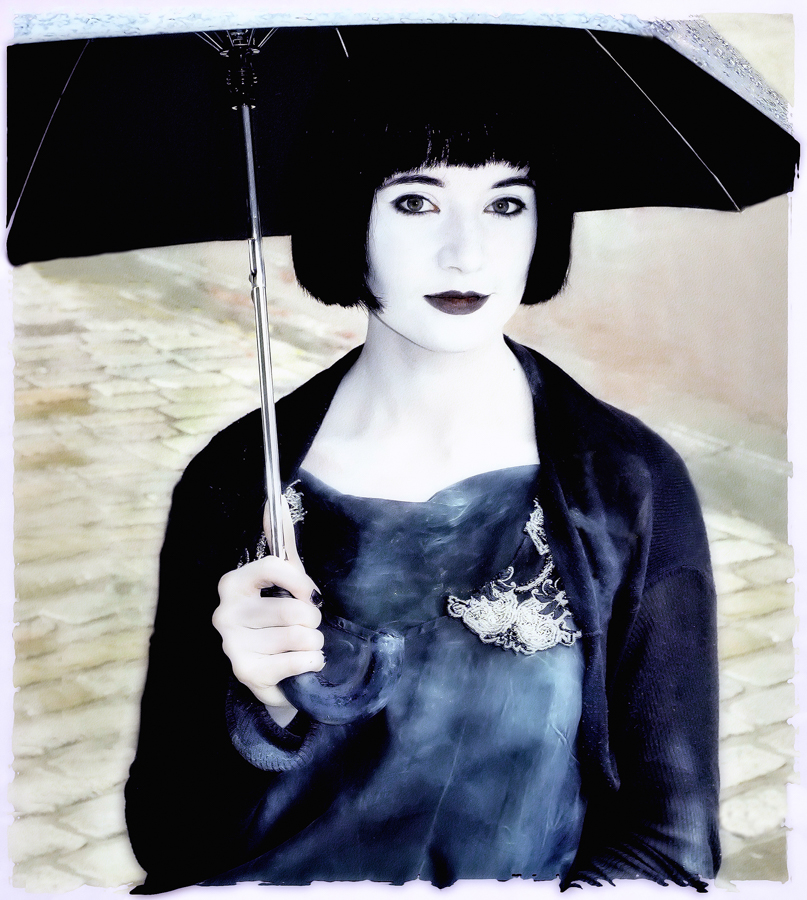
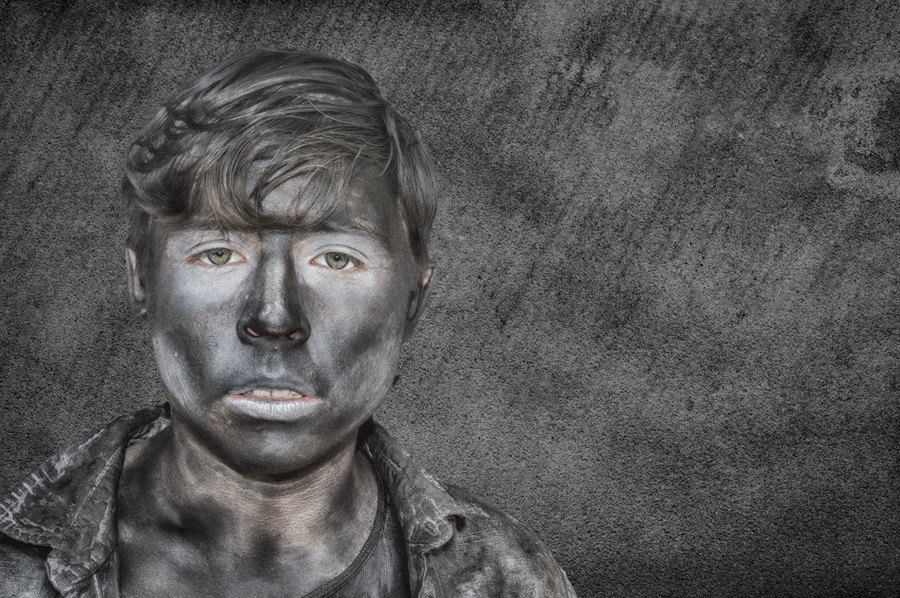
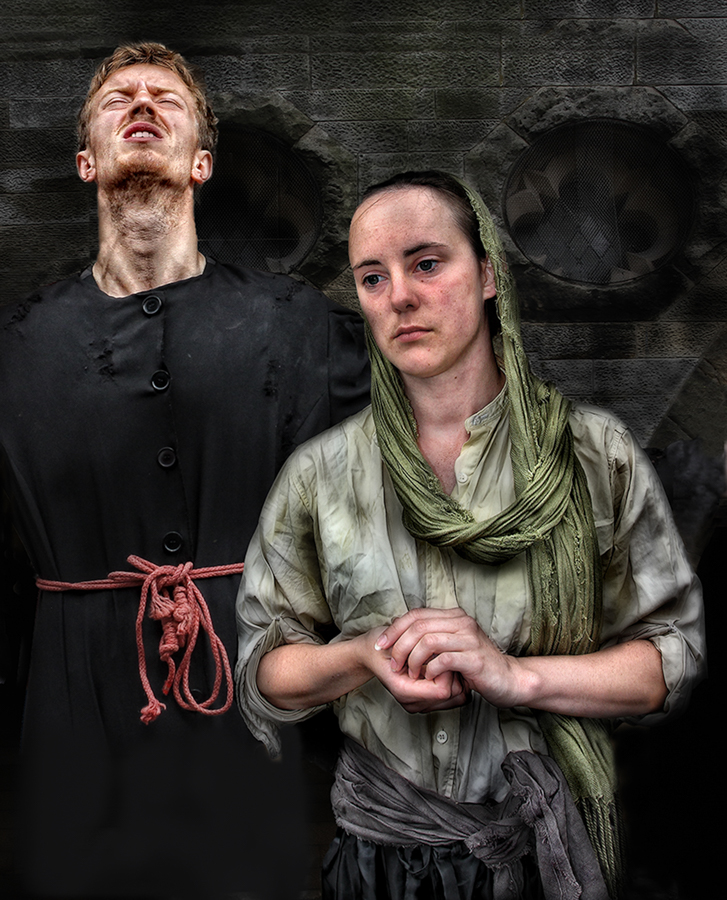
Digital gave him more latitude , usually away from natural history, when making pictures of any subject that caught his eye. I spent many happy days with him ambling up and down the Royal Mile in Edinburgh, during August days at ‘The Fringe’, photographing the theatrical and downright ludicrous actors parading about in a wild assortment of costumes and even louder make -up. His dry wit and sense of humour was always close to the surface. Humour is a better and lasting way of looking at the world and we did laugh – such accented utterances as ” … how do they get away with looking like that “, and ” fancy roaming about in that rigout “, not forgetting ” God Knows how long that took to get done up like that , mind you it takes me time to reassemble who I was when I went to bed !! “. We had a discussion on a ridiculous idea of growing index linked celery, plus the odd moan about “why do we need trams in Edinburgh”, and he was equally forthright on Scottish Politics. He loved flying, enjoyed Italian cuisine, a glass of red wine and was quite given to grumbling about Falkirk FC’s less than electrifying performance at Brockville. Sandy quite fancied the noble aspiration of becoming Lord Caerketton – named after the rounded Pentland hill he could see from his living room window. He liked the idea of having a spoof moss covered butler known as ‘Spasm’ to polish the horse brasses!
Lecturing – Sandy knew how to entertain an audience, plenty of laughter, anecdotes and personal utterances – of natural history he mentioned ” you can get away with showing all sorts of bad behaviour, things eating each other, or mating, fighting, spitting, trapping each other in webs, which you can’t show with using people!” There is an unassuming technical prowess in his pictures – and moments that somehow occurred. To use an analogy – like a classical musician, he never wasted the notes given to him – just look at that incredible picture of a startled stoat emerging from a hollow tree, staring straight into Sandy’s lens.

And yet, in this moment, there is a telling sorrow, those endless days of his past, those bright sunlit hours, they are now clouded in a veil of melancholy, on lost horizons of regret, of unforced emotion, and that same sad echo when a coloured world fades to grey. There’s an empty chair, a remembered soft baritone voice, that calm ‘ O aye’. Alex ‘ Sandy’ Cleland FRPS – It’s been a luminous and prolific ride, some 80 summers long. The personal memories of those so close to you will always be there, they never leave, they are such treasures, keep them safe.
Leigh Preston
 The London Salon of Photography